Sidelined on the Throne: Why Some RPGs Turn You Into a Passenger in Your Own Story
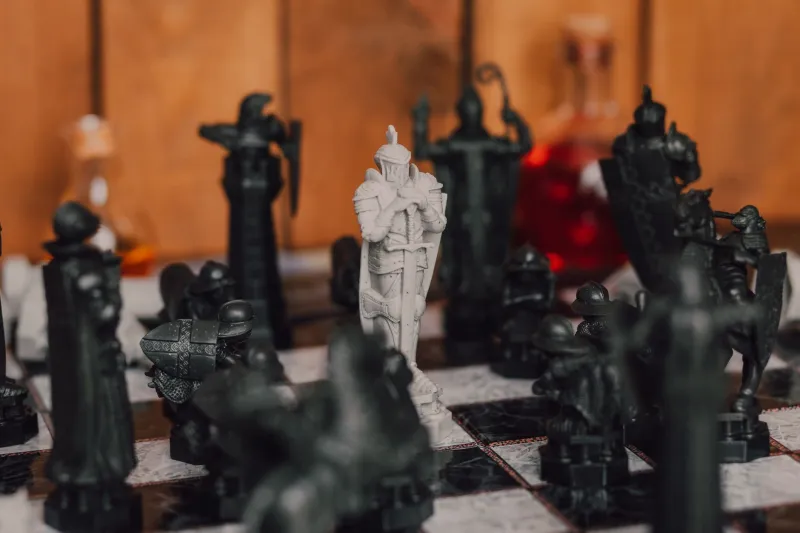
There's a moment that happens in certain RPGs — you probably know the one. You're watching a cutscene, the camera is sweeping dramatically across a battlefield, some NPC you've known for maybe three hours is delivering a speech that would make Aragorn tear up, and you realize your character is just... standing there. Nodding. Maybe blinking. The fate of an entire kingdom is being decided, and you're basically furniture with a health bar.
Welcome to what we're calling the Phantom King Effect: that creeping feeling that your protagonist has become less of a hero and more of a narrative placeholder, dragged through a story that was always going to happen with or without you.
When the Story Outgrows the Player
Cinematic RPGs have come a long way. The production values are genuinely stunning right now — voice acting, motion capture, orchestral scores that could fill Madison Square Garden. But there's a tradeoff that doesn't get talked about enough. The more resources a studio pours into crafting a specific story, the harder it gets to let that story bend around you.
The result is a kind of invisible tension. On one side, you've got a writer's room that has carefully constructed a narrative arc with themes and character beats and emotional payoffs. On the other side, you've got a player who wants to feel like their decisions actually steer the ship. When those two forces collide without a smart design solution, the player usually loses — even if they don't immediately notice it.
You start making choices that feel meaningful. You pick a dialogue option that sounds bold, defiant, the kind of thing a real ruler would say. Then the next cutscene plays out exactly the same way it would have if you'd picked the other option. The illusion holds for a while. Then it doesn't.
The Usual Suspects: Games That Bench Their Own Hero
We're not here to drag specific titles through the mud — but patterns are patterns. A lot of open-world RPGs with heavy cinematic ambitions fall into this trap. You'll find it in games where the main villain gets more screen time than you do, where key plot revelations happen in conversations you're not invited to, or where the emotional climax of the story hinges entirely on an NPC's arc rather than your own.
The tell-tale signs are subtle at first. Side characters start making decisions that affect your kingdom without your input. Lore gets delivered through lengthy exposition dumps that your character absorbs passively. The game's marketing promises "a world that reacts to your choices," but in practice those reactions are mostly cosmetic — different colored flags on the same castle, basically.
Some games go even further and give you a character with a locked backstory, a predetermined motivation, and a personality that doesn't flex no matter what you do. That's not necessarily bad design — some of the greatest RPGs ever made use fixed protagonists. But if the game is simultaneously selling you on player agency, the mismatch becomes genuinely frustrating.
What Actually Works: Keeping the Player in the Center
Here's the thing — this problem is solvable, and plenty of games have cracked it. The difference usually comes down to one core design philosophy: the player character should be the lens, not the obstacle.
Games that nail this treat your protagonist as the pivot point around which every other story element rotates. Big narrative moments are filtered through your decisions, not delivered to you from above. When an ally betrays you, it stings because you had a hand in building that relationship. When a kingdom falls, it lands harder because you made the calls that led there — or failed to make them in time.
The best examples let you feel genuinely powerful even within a structured story. They give you real information, real stakes, and real consequences that branch in ways you didn't predict. The story might have a destination, but the route is yours to find.
From a practical standpoint, if you're navigating a game that keeps trying to bench you, there are ways to fight back. Lean into the mechanics that do give you agency — faction decisions, companion relationships, resource management, kingdom-building systems. These are often where the real player expression lives, even when the main plot is running on rails. Treat the cinematic moments as context and the systemic moments as your actual game.
The Throne Room Problem
There's a specific version of the Phantom King Effect that's worth calling out on its own: the Throne Room Problem. This is when your character physically ascends to power — becomes king, emperor, chosen one, whatever — and then the game promptly strips away any meaningful expression of that power.
You built the throne. You fought for it. Now you sit in it and watch advisors argue while the real decisions happen offscreen. It's the RPG equivalent of winning a championship and then being told you can't play in the next season.
This happens a lot in games that have a strong "rise to power" first act but didn't fully think through what ruling actually looks like in practice. The design team put all their energy into the ascent and not enough into the governance. So once you've got the crown, the game quietly reshuffles you into a supporting role while the next villain monologues into the void.
If you're playing a game like this, the honest move is to manage your expectations early. Recognize which genre of game you're actually in. If it's fundamentally a story-driven cinematic experience with light RPG mechanics, enjoy it for what it is rather than resenting it for what it isn't.
How to Know Before You Buy
For players who genuinely care about agency — who want to feel like the king, not just play one — there are green flags to look for before you drop sixty bucks.
Check how the game handles dialogue. Are there multiple response options that actually produce different outcomes, or is it mostly flavor text with the same result? Look at how companions are written — do they react to your choices in ways that feel personal, or do they follow a script regardless of your actions? Pay attention to whether reviewers talk about "the story" as a fixed thing or as something that shifted based on how they played.
Also, read between the lines of developer interviews. When a studio talks almost exclusively about narrative and production value and very little about systems or player choice, that's useful information. Great stories and great agency aren't mutually exclusive — but they do require intentional design work to coexist.
The Bottom Line
The Phantom King Effect isn't a death sentence for an RPG. Plenty of games that lean hard into authored storytelling are genuinely worth your time. But if you're the kind of player who needs to feel the weight of the crown — who wants your decisions to echo through the world you're building — knowing the difference before you start matters.
The best RPGs don't just let you watch the story unfold. They make you responsible for it. That's the standard worth holding onto, and it's the kind of game KingMaker Chronicles will always be here to help you find.