Forgotten Crown: Why RPG Sequels Keep Pretending Your Last Game Never Happened
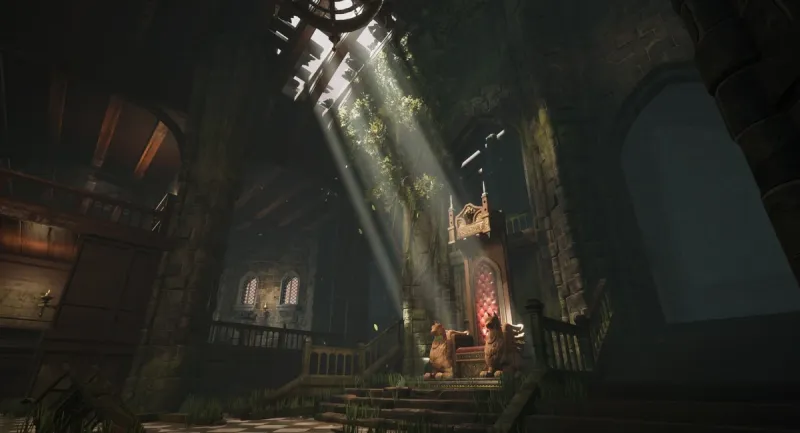
Photo: RPG sequel forgotten hero legacy abandoned throne fantasy world, via app-time.ru
Let's set the scene. You finished the first game. You made the hard calls, survived the betrayals, and emerged as the undisputed ruler of a world that bent to your will. The credits rolled. You felt it — that rare, satisfying weight of a story that actually respected the choices you made. Maybe you even imported your save file, excited to see what your legend looks like in the next chapter.
And then Act One of the sequel handed you a fetch quest.
This is one of the most reliably frustrating patterns in RPG design: the sequel amnesia problem. You arrive in a new game as the established hero, the renowned ruler, the legendary figure from the last installment — and within the first few hours, the game has quietly stripped away everything you built. Your allies have scattered. Your authority has evaporated. Your reputation, apparently, didn't travel well. Time to grind your way back to relevance.
Why does this keep happening? And more importantly — does it have to?
The Reset Button and Why Developers Love It
To be fair to developers, there are real structural reasons why sequels tend to reset player power. The most obvious one is accessibility. If a sequel assumes you've played the first game and carries over your full power level, it's hostile to new players jumping in at part two. That's a business problem as much as a design problem — you don't want to wall off half your audience because they missed the original.
There's also the narrative problem. If you arrive in a sequel already at the peak of your power, where does the story go? RPGs are built around growth arcs. You start small, you build up, you face the final challenge with everything you've earned. If you start at the top, the genre's core loop breaks down.
And then there's the practical problem of branching saves. Games like Dragon Age and Mass Effect let players make wildly different choices throughout the story. If the sequel has to account for every possible combination of decisions from the first game, the development cost explodes. It's much easier to establish a "canonical" outcome and move forward from there — even if that means your specific playthrough gets quietly overwritten.
All of that is understandable. None of it makes it less annoying.
The Fan Frustration Is Real
The emotional response to sequel amnesia isn't just impatience. It's something closer to betrayal. RPGs, more than almost any other genre, ask you to invest in your character. You make choices that feel like your choices. You build relationships, forge identities, and create stories that feel personal. When the sequel treats all of that as a footnote — or worse, ignores it entirely — it retroactively cheapens the experience you had.
Dragon Age: Inquisition is probably the most discussed example of this in recent memory. The Dragon Age Keep system, which let players specify their choices from the first two games, was a genuine attempt to carry forward player decisions. But many of those imported choices showed up as minor background details at best, and completely absent at worst. The protagonist of Dragon Age 2 — a character players had spent an entire game with — was reduced to a brief cameo. The decisions that defined your Origins playthrough occasionally surfaced in dialogue, but rarely felt like they actually shaped the world you were inhabiting.
Mass Effect 3 tried harder, and the results were genuinely impressive in places. Decisions from Mass Effect 1 and 2 rippled forward in ways that felt meaningful — characters you'd saved showed up, alliances you'd built paid off, and choices you'd made years earlier had real consequences. But even that game eventually funneled everyone toward the same ending corridor, which is a different kind of amnesia problem.
The Legacy Systems That Actually Work
It's not all bad news. A handful of franchises have found ways to honor player history without breaking their own game design.
Baldur's Gate 3 doesn't carry saves from the classic Baldur's Gate games — the gap is too large, technically and narratively — but it does something smart: it treats the legacy of those games as part of the world's texture. References, locations, and lore from the originals reward longtime fans without requiring new players to have done homework.
The Witcher 3 is probably the gold standard here. It carries forward decisions from The Witcher 2 in ways that feel genuinely integrated rather than cosmetic. Characters remember what you did. Political situations reflect your prior choices. You arrive as Geralt with an established reputation, and the world treats you like someone with a history. You're not starting from zero — you're starting from somewhere, and that somewhere matters.
Pillars of Eternity 2: Deadfire deserves real credit for importing your Pillars 1 choices and letting them color your standing in the new world. Your past decisions affect how certain factions view you, what backstory details NPCs reference, and even some quest outcomes. It's not perfect, but it's one of the most earnest attempts in the genre to make your previous playthrough feel like it actually happened.
What "Respecting Legacy" Actually Looks Like
The games that handle this best share a few common traits. They don't try to carry over your power level — they carry over your story. There's a meaningful difference. Arriving in a sequel as a legendary figure who's been politically outmaneuvered, or physically weakened, or placed in a new context where your old authority doesn't apply — that can work, as long as the world still remembers what you did. The NPCs know your name. The factions have opinions about your past decisions. The history you made is present in the texture of the new world, even if you're not at the top of the food chain yet.
What doesn't work is arriving in a sequel where your legendary status is mentioned once in a loading screen tip and then never referenced again. That's not a narrative reset — that's erasure.
The Takeaway
The sequel amnesia problem probably isn't going away entirely. The structural reasons behind it are real, and the genre hasn't found a universal solution. But the franchises that try — that put in the work to make your history feel present even when your power has been reset — create something genuinely special. They make you feel like you're continuing a story, not starting a new one with familiar wallpaper.
If you're heading into a sequel and worried about getting the full experience, check whether the game offers any kind of legacy import or choice-specification system before you start. And if it doesn't? Go in with adjusted expectations. Appreciate the new story for what it is, rather than mourning the one that got quietly shelved in the tutorial.
Your crown might be gone. But the kingdom you built? That should always be worth remembering.