No Good Deed: The Cruel Irony of RPGs That Punish You for Being Generous

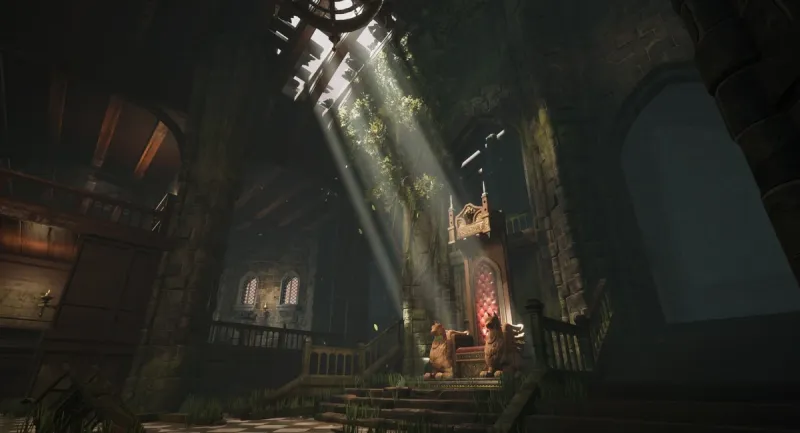
Photo: Miroslaw Magola alias Magneticman, CC0, via Wikimedia Commons
You wanted to be the hero. Not the brooding antihero, not the charismatic schemer — the actual, genuine, help-people-and-ask-for-nothing hero. So you picked the dialogue options that made sense for a good ruler. You donated to the town fund. You let the bandit go after he promised to reform. You turned down the sketchy deal that would've made you rich but cost the village its water supply.
And then, about forty hours in, you realized the game had been quietly punishing you the whole time.
Reputation and faction systems are one of the most interesting design spaces in modern RPGs — and one of the most consistently broken. The promise is simple: your choices shape how the world sees you, and that reputation opens or closes doors. In theory, that's great. In practice, a lot of games have built systems where being genuinely good locks you out of some of the most powerful, interesting, or narratively satisfying content in the entire experience. Let's talk about why that happens, which games are the worst offenders, and which ones actually got this right.
How Reputation Systems Are Supposed to Work
The ideal version of a faction reputation system is pretty elegant. Different groups in the world have different values. Aligning with one group earns you their trust and their rewards — but it might cost you standing with their rivals. You can't please everyone, so you have to make real choices that reflect your character and your priorities. Consequences flow naturally from those choices.
That's the dream. And when it works — like in Fallout: New Vegas, where your relationships with the NCR, the Legion, House, and the independent factions create genuinely different playthroughs — it's some of the best design in the genre. Your reputation feels earned, and the tradeoffs feel fair.
But a lot of games build systems that look like this on the surface while functioning very differently underneath.
The Benevolence Trap
Here's the pattern that keeps showing up: the game presents you with a moral choice that seems straightforward. Help the refugees, or take the bribe. Obvious call, right? You help the refugees. Your "good" reputation ticks up. The villagers love you.
What the game doesn't tell you — at least not clearly — is that the faction offering the bribe is also the faction that controls access to the most powerful enchantments in the game. Or the rare mount. Or the dialogue branch that unlocks the true ending. By making the "right" call, you've quietly disqualified yourself from content you didn't even know existed.
This is design oversight at its most frustrating, because it punishes players for doing exactly what the game seemed to encourage. It's not a tradeoff — it's a trap. And it hits hardest on first playthroughs, when you don't have a wiki open and you're just trying to play the game honestly.
Dragon Age: Inquisition has moments of this with its Orlesian court mechanics, where the "politically correct" choices can leave you without the influence you need to unlock certain advisors or war table operations. Pathfinder: Kingmaker is notorious for alignment-gating abilities in ways that punish good-leaning players who didn't min-max their moral compass from the start.
When Faction Loyalty Becomes a Cage
The problem compounds when games use reputation as a hard lock rather than a sliding scale. If your standing with Faction A is too high, Faction B won't deal with you — period. No negotiation, no workaround, no middle path. You made your choice, now live with it.
In a game where those factions offer complementary content — different questlines, different gear, different story perspectives — that's fine. That's replayability. But when one faction has clearly superior mechanical rewards and the other only exists to provide the "good" option, you've created a system where virtue is literally less efficient than corruption.
Some games try to paper over this with "neutral" options that let you play both sides, but that creates its own problems. The neutral path often has the weakest narrative payoff, leaving players who wanted to engage thoughtfully with the moral landscape feeling like they got the participation trophy ending.
The Games That Got It Right
This isn't a universal problem. Some developers have clearly thought hard about how to make benevolence feel genuinely rewarding rather than mechanically inferior.
Divinity: Original Sin 2 handles this better than most. Your reputation with various factions affects NPC reactions and dialogue options, but the game doesn't hard-gate its best content behind moral alignment. You can be a good-faith ruler and still access powerful builds, interesting questlines, and satisfying endings.
Baldur's Gate 3 is probably the current gold standard for this kind of design. The game has plenty of morally complex choices with real consequences, but it doesn't systematically reward evil over good. Generous, principled play opens doors rather than closing them — and the game is generous enough with information that you rarely feel blindsided by the downstream effects of your decisions.
Tyranny deserves a special mention here, because it does something genuinely clever: it's a game where you're working for an evil empire, and the moral complexity comes from navigating that reality rather than from a simple good/evil slider. Every choice has costs, but the costs feel like part of the world's logic rather than arbitrary punishment for picking the "nice" option.
What Developers Need to Fix
The core issue is one of transparency and intent. If a game wants to create genuine tradeoffs between moral paths, it needs to be upfront about what players are trading away. Hiding the mechanical cost of benevolent choices behind twenty hours of gameplay isn't meaningful consequence design — it's a gotcha.
The fix isn't to make every path equally powerful in a bland, homogenized way. Tradeoffs are interesting. Different playstyles should feel different. But when the "good" path consistently underperforms the morally compromised path in mechanical terms, it sends a message about what the game actually values — and that message is hard to ignore.
Good rulers should feel like good rulers. Generous choices should open doors, not quietly lock them. And if being kind costs you something, you should know what that cost is before you pay it.
The Verdict
If you're heading into a new RPG and planning to play the principled ruler, do yourself a favor and scan the community wikis for faction reputation effects before you commit to any major choices. Not because you should min-max your morality — but because knowing the rules of the game lets you make real decisions instead of accidentally stumbling into a trap dressed up as a virtue.
And if you've already been burned by a reputation system that punished you for playing fair? You're not alone. You're just playing a game that hasn't caught up to its own aspirations yet.